

Assisted Living Shade Structures
Commercial shade structures for Assisted Living Communities and Long-Term Care Homes.
10% Off On Permanent Umbrellas
Transform your assisted living or long-term care facility with modern outdoor shade structures that combine beauty and practicality. These shade systems create serene, safe, and inviting outdoor spaces that support wellness, relaxation, and community. Designed for residents, staff, and visitors, the right shade solution makes outdoor areas more usable and enjoyable. From covered parking to shaded walkways and recreation spaces, these solutions balance function and design while providing reliable sun protection and enhancing overall well-being.
Assisted Living Shade Structure Applications
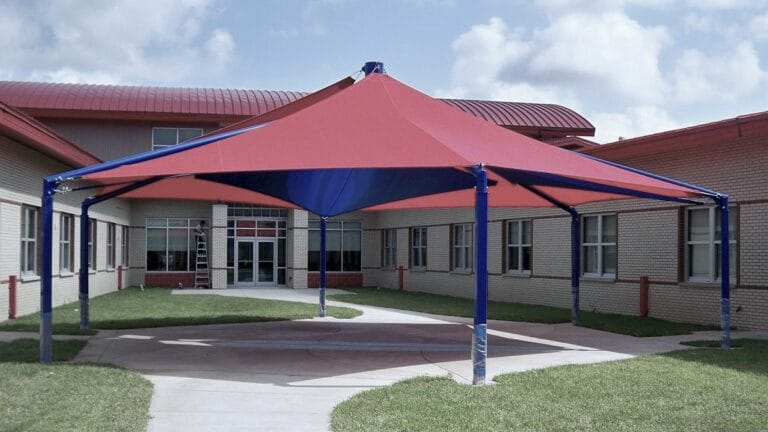
Courtyard Shade
Assisted living courtyard shade structures create peaceful, inviting outdoor retreats where residents can relax, socialize, and enjoy meaningful connection. These shade solutions deliver reliable, year-round sun protection, helping to keep courtyards comfortable no matter the season. Cool, shaded environments naturally encourage light activity, such as reading, gentle exercise, and quiet conversation, while significantly reducing the risk of overheating or sun-related discomfort. With dependable coverage in place, courtyards become versatile, welcoming spaces suited for both structured programming and casual, everyday outdoor enjoyment.
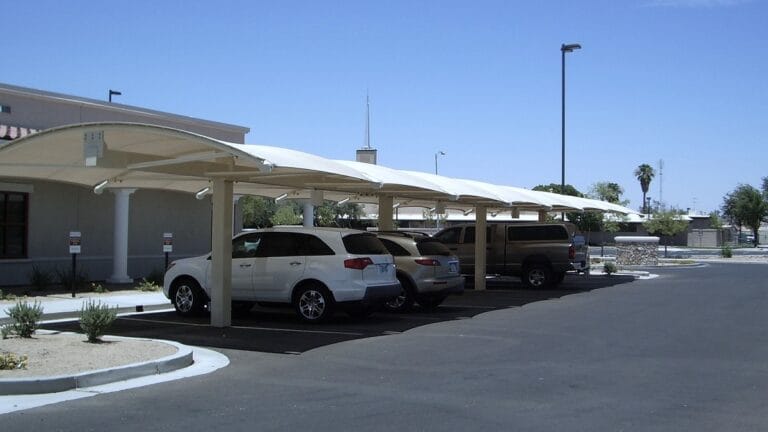
Covered Parking
Assisted living parking shade structures provide a practical way to protect vehicles and people across every parking area on the property. Shading resident spots guards cars against UV damage and keeps interiors cooler, while shaded guest parking makes visits more comfortable, especially longer ones. Employee parking benefits too, with staff cars protected from sun exposure throughout the workday. Shade over event parking keeps vehicles cool so guests can focus on gatherings rather than hot cars, and covered pick-up and drop-off zones make transitions easier on residents and families alike. Shuttle stops and rideshare areas stay comfortable for anyone waiting, while shaded loading zones help staff move supplies efficiently. Many communities are now adding shade over EV charging stations as well, rounding out a shade system that supports every corner of the property.
Entrance Shade
Assisted living entrance shade structures make a lasting first impression. They add a sense of comfort and elegance to the arrival experience, welcoming residents, guests, and staff alike. By blocking direct sunlight, these shade solutions help maintain cooler temperatures near entryways, easing strain on HVAC systems and lowering energy costs. Beyond comfort, entrance shade systems support a safer environment. Reduced glare improves visibility for those entering and exiting the building, while lower heat levels make the space more pleasant to navigate. The result is a more professional, polished appearance that reflects positively on the facility as a whole. Thoughtfully designed entrance shade structures do more than provide relief from the sun. They elevate the overall guest experience while reinforcing a commitment to comfort, safety, and style.
Outdoor Dining Shade
Outdoor dining shade structures create a cooler, more comfortable setting for meals and snacks at assisted living facilities. By shielding residents and guests from direct sun, these shade systems make it easier to enjoy fresh air without the discomfort of overexposure. This added comfort encourages more time spent outdoors, transforming patios and courtyards into inviting spots for dining and casual conversation. Shade structures also extend how these spaces can be used throughout the day, giving residents a comfortable place to gather rather than retreating indoors. For assisted living communities, this simple addition supports outdoor engagement, enhances daily quality of life, and makes shared dining areas more welcoming for both residents and visitors.
Outdoor Event Shade
Outdoor event shade structures help ensure attendee comfort during gatherings at assisted living facilities by creating cool, shaded spaces for residents and guests to enjoy. These shade solutions allow outdoor events to proceed comfortably, without the discomfort of direct sun exposure, helping keep temperatures more manageable throughout the day. Beyond comfort, these systems offer real versatility: they can be customized to suit a range of venue sizes and architectural styles, making them a practical fit for courtyards, patios, and gathering spaces alike. For assisted living communities looking to make outdoor events more inviting, a well-placed shade structure offers a simple, effective way to enhance the experience for residents, families, and staff.
Outdoor Gym and Spa Shade
Exercise and relaxation naturally complement each other, and shade structures over outdoor gyms and spas at assisted living facilities make these spaces far more inviting for residents. Shaded outdoor fitness areas support safe, comfortable exercise by helping prevent overheating, encouraging residents to stay active and engaged in their physical well-being. Nearby, shaded spa areas offer a calming retreat where residents can unwind without direct sun exposure interfering with their relaxation. Together, these shade systems transform outdoor gym and spa areas into functional, comfortable extensions of daily life at the facility. With reliable UV protection built into the fabric, residents can enjoy longer, more comfortable time outdoors, whether they're staying active or simply relaxing in the fresh air.
Outdoor Recreation Shade
Outdoor recreation plays a key role in keeping assisted living residents active, engaged, and connected. Shade structures bring comfort and protection to these spaces, making outdoor activities more enjoyable year-round. On shuffleboard courts, a shade system lets residents play at their leisure without worrying about sun exposure, supporting a safe and pleasant environment. Chess areas benefit too: a shaded setting encourages strategic gameplay while keeping residents cool and shielded from harsh UV rays. Putting greens are another natural fit, offering shaded space for low-impact exercise in a cool, protected setting. Across each activity, a well-designed shade structure helps residents stay comfortable, engaged, and safe while enjoying the outdoors.
Patio Shade
Assisted living patio shade structures transform outdoor patio areas into comfortable, inviting spaces for residents to gather and unwind. By minimizing direct sun exposure, these shade systems make it easier to enjoy fresh air without discomfort. The added visual appeal complements existing architecture, giving patios a polished, cohesive look that draws residents outdoors. This blend of comfort and style encourages more time spent socializing, relaxing, or simply enjoying the surroundings. In assisted living communities of any size, a well-shaded patio quickly becomes a favorite gathering spot, supporting both wellness and community connection among residents.
Sport Court Shade
Active residents in assisted living communities often enjoy outdoor sport courts, and shade structures make these spaces far more comfortable for players and spectators alike. Shading a tennis court, for instance, encourages longer playtime while lowering the risk of heat exhaustion. Pickleball, a favorite pastime for many seniors, becomes safer and more enjoyable when courts are shaded from direct sun. Volleyball courts benefit too, staying cooler so residents can play for longer stretches without discomfort. For communities with multi-sport courts, a well-placed shade canopy offers reliable protection across various activities, keeping the space usable even during the hottest parts of the day. Whatever the sport, a thoughtfully designed shade system helps residents stay active, social, and comfortable outdoors.
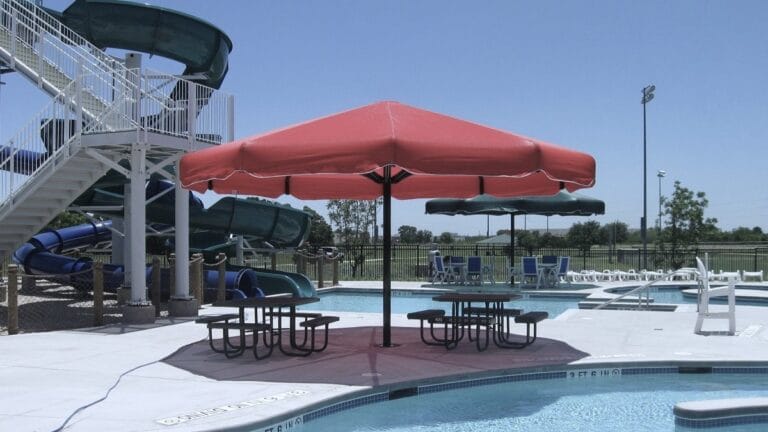
Swimming Pool Shade
Swimming pools are a key feature in many assisted living communities, and shade structures enhance poolside comfort and safety. Covered pools keep swimmers cool and reduce glare on sunny days, while shaded pool decks give residents and guests a comfortable spot to relax poolside. Private, shaded cabanas add a luxurious touch, offering a peaceful retreat from the sun. Nearby dining areas benefit too, with shade making it easier to enjoy meals and snacks by the water. Shaded lifeguard stations help staff stay cool and focused, supporting swimmer safety throughout the day. Jacuzzi areas feel more relaxing under shade, protecting users from direct sun exposure, and shaded pool volleyball courts keep the fun going by making active play more comfortable for residents.
Waiting Area Shade
Waiting area shade structures bring comfortable, welcoming seating to high-traffic zones at assisted living facilities. Because these spaces see constant use from residents, visitors, and staff throughout the day, adding shade makes a meaningful difference in comfort. A shaded waiting area stays noticeably cooler, turning what could be a stressful outdoor wait into a pleasant one. Residents and guests benefit from relief against sun exposure while they wait. Beyond comfort, these shade structures elevate the overall look and feel of your facility, reflecting a thoughtful, resident-first approach to outdoor design. Investing in shade for waiting areas is a simple way to enhance daily experience.
Walkway Shade
Walkway shade structures play a valuable role in improving mobility and comfort at assisted living facilities. By covering the paths that connect parking areas, recreation spaces, and residential buildings, these shade systems create a more comfortable and inviting environment for residents to move through each day. This is especially meaningful for those using mobility aids, who benefit from reduced sun exposure and a more consistent, comfortable walking experience. Shaded walkways also enhance the overall aesthetic of a facility, giving outdoor spaces a polished, welcoming feel. Beyond comfort, these structures encourage residents to spend more time outdoors, supporting both physical activity and overall wellbeing. With commercial-grade construction and up to 97% UV-blocking fabric, walkway shade systems offer safe, sun-protected passage that residents and staff can rely on year-round.
Get Started
Transform your assisted living facility with permanent shade structures today.
Why Designs For Shade for Assisted Living
- Modern Designs - matches upscale senior communities
- Pre-Engineered - engineering done for care facilities
- Low Maintenance - frees staff for resident care
- Hail Protection - shields wheelchair and walker paths
- UV Protection - protects thin, fragile aging skin
- Temperature Reduction - prevents heat stress in elderly
Assisted Living Shade Structure Service Areas
Our shade structures are available for Assisted Living communities and long-term care homes in the following service areas:
North East
New England
- Connecticut
- Maine
- Massachusetts
- New Hampshire
- Rhode Island
- Vermont
Middle Atlantic
- New Jersey
- New York
- Pennsylvania
Midwest
East North Central
- Illinois
- Indiana
- Michigan
- Ohio
- Wisconsin
West North Central
- Iowa
- Kansas
- Minnesota
- Missouri
- Nebraska
- North Dakota
- South Dakota
South
South Atlantic
- Delaware
- Florida
- Georgia
- Maryland
- North Carolina
- South Carolina
- Virginia
- West Virginia
East South
- Alabama
- Kentucky
- Mississippi
- Tennessee
West South Central
- Arkansas
- Louisiana
- Oklahoma
- Texas
West
Mountain
- Arizona
- Colorado
- Idaho
- Montana
- Nevada
- New Mexico
- Utah
- Wyoming
Pacific
- California
- Oregon
- Washington
Long Term Care Benefits
- Improved Safety - reduces glare-related fall risk
- Enhanced Comfort - eases arthritis and joint pain
- Promote Social Interaction - supports memory care engagement
- Promote Physical Activity - aids mobility and rehab therapy
- Extended Outdoor Time - boosts vitamin D safely
- Aesthetic Appeal - softens the clinical facility look
- Protect Outdoor Furniture - preserves resident seating areas
- Energy Savings - may lower costs for care facilities
Assisted Living Shade Structure FAQs
Why do assisted living communities need shade structures?
Older adults often have more sensitive skin and are more vulnerable to heat stress. Shade structures make outdoor spaces safer and more comfortable, encouraging residents to spend time outside, stay active, and connect with others.
What materials are assisted living shade structures made from?
They combine a steel frame with commercial-grade HDPE mesh fabric, built to withstand daily use across courtyards, walkways, and recreation areas while keeping their appearance over time.
How much UV protection do these structures provide for residents?
The fabric blocks up to 97% of harmful UV rays, which is especially important for elderly residents with thinner, more fragile skin that’s more susceptible to sun damage.
Are shade structures at assisted living facilities built for high winds?
Yes, they’re pre-engineered for high wind conditions, giving facility administrators confidence that outdoor structures will hold up reliably across seasons.
Do these structures protect against hail?
Yes. The structures are designed to withstand hail, protecting walkways, seating areas, and residents using mobility aids from potential impact hazards.
Are assisted living shade structures freestanding?
Yes, they’re freestanding, which allows facilities to place shade wherever it’s needed most, whether that’s a courtyard, entrance, or walkway, without depending on the building’s structure.
Can shade structures be designed to fit our facility's architecture?
Yes. Structures are architecturally designed with a range of styles, sizes, fabric colors, and powder coat finishes, so shade can soften the clinical look of a facility while matching its existing design.
How much maintenance do these structures require?
Very little. The low-maintenance steel and HDPE fabric frees staff time for resident care instead of outdoor upkeep.
What areas of an assisted living facility benefit most from shade?
Courtyards, entrances, walkways, dining patios, pools, and recreation spaces all benefit, since these are the areas where residents, staff, and visitors spend meaningful time outdoors.
What types of shade structures work well for senior care facilities?
Shade canopies, shade sails, permanent umbrellas, multi-layer and multi-panel structures, large span structures, and cantilever designs all have a place, depending on the specific outdoor space being covered.
How does shade support resident safety at assisted living facilities?
Reduced glare improves visibility for residents navigating outdoor spaces, which can lower fall risk, while cooler shaded surfaces reduce the chance of heat-related discomfort or overheating.
Can shade structures support memory care and social engagement programs?
Yes. Comfortable, shaded outdoor spaces encourage more time spent together, supporting light activity, conversation, and structured programming in a setting that feels less clinical.
Do shade structures help residents get safe outdoor time?
Yes. Shaded spaces allow residents to spend more time outdoors comfortably, which supports safe exposure to fresh air and natural light as part of daily wellness.
How does shade help reduce energy costs at a care facility?
Shading entrances and areas next to windows can ease the strain on HVAC systems, potentially lowering energy costs for the facility.
Can shade structures improve comfort for residents with joint pain or arthritis?
Cooler, shaded outdoor spaces reduce heat-related strain on joints, making it more comfortable for residents with arthritis or mobility challenges to spend time outside.
Are shade structures helpful for physical therapy and rehab programs?
Yes. Shaded walkways, courtyards, and recreation areas give residents a more comfortable environment to work on mobility and rehab goals without added heat stress.
What's the benefit of shading an assisted living courtyard?
A shaded courtyard becomes a peaceful, year-round gathering spot for residents, encouraging light activity, conversation, and relaxation without the risk of overheating.
Why is covered parking important at assisted living facilities?
Shaded parking protects resident, guest, and staff vehicles from UV damage while making pick-up, drop-off, and shuttle areas more comfortable for residents and families during transitions.
How does entrance shade benefit assisted living residents and visitors?
Entrance shade creates a comfortable, welcoming arrival experience, reduces glare for safer navigation, and helps keep temperatures cooler near the building’s HVAC-sensitive entry points.
Why should outdoor dining areas at senior facilities be shaded?
Shade makes it easier for residents to enjoy meals and fresh air without sun discomfort, encouraging more time spent outdoors and turning patios into welcoming gathering spots.
Can shade structures support outdoor events at assisted living communities?
Yes. Shade keeps outdoor gatherings comfortable for residents, families, and staff, and structures can be customized to fit courtyards, patios, or larger event spaces.
How does shade improve outdoor gym and spa areas for seniors?
Shaded fitness areas help prevent overheating during exercise, while shaded spa spaces offer a calming retreat where residents can unwind without direct sun interfering with relaxation.
What outdoor recreation activities benefit from shade at senior communities?
Shuffleboard, chess, and putting greens are popular activities that stay more comfortable and inviting for residents when shaded from direct sun.
Why add shade to an assisted living patio?
A shaded patio becomes a favorite gathering spot, encouraging residents to spend more time socializing and relaxing outdoors in comfort.
Are sport courts at senior communities worth shading?
Yes. Shaded tennis, pickleball, and volleyball courts encourage longer, safer playtime by reducing heat exhaustion risk for active residents.
How does shade improve pool safety and comfort for residents?
Shade structures keep pool decks and dining areas nearby cooler, support lifeguard alertness at shaded stations, and offer private cabana retreats for residents who prefer to relax out of direct sun.
Why do waiting areas at care facilities need shade?
Waiting areas see constant use from residents, families, and staff, so shade turns what could be an uncomfortable outdoor wait into a pleasant one.
What's the benefit of shading walkways for residents using mobility aids?
Shaded walkways offer a more consistent, comfortable walking experience, which is especially valuable for residents using wheelchairs or walkers who spend more time moving at a slower pace outdoors.
Can shade structures be designed for facilities of different sizes?
Yes. Structures scale from a single canopy over a small patio to large span systems covering expansive courtyards or parking lots, fitting communities of any size.
What shade structure style works best for a memory care courtyard?
A standard shade canopy or multi-panel design works well for memory care courtyards, offering broad, even coverage across the space to support calm, structured outdoor programming.
Get Started
Transform your assisted living facility with permanent shade structures today.